
Osceola Previous-Resident Sources by Era
The best source depends on when the person may have lived at the address. Current property data points to the first deed. Historical indexes carry the title trail farther back. Directories and census schedules add people who did not own the land. The dates below state only what the Osceola County research verified.
| Source | Verified time span | Where it is kept | What it can establish |
|---|---|---|---|
| OCPA roll, values, and sales | Current data; annual final-roll downloads for 2021-2025 | Osceola County Property Appraiser | Owner, sale events, structure and value clues |
| PERCH official-record index | Starting year not stated on the public landing page | Osceola County Clerk | Grantor, grantee, instrument, date, and book/page |
| Historical index and microfilm | Historical books; start varies by series | Clerk and Records Center | Subdivision or section-township-range bridge to book/page |
| Local directory | 1921-22 title verified; other years need catalog confirmation | State Library and genealogy repositories | Names, occupations, addresses, and locality context |
| Federal population census | Public schedules through 1950 | NARA, partners, and library databases | Household members at the time of enumeration |
| Kissimmee Sanborn map | May 1889 | Library of Congress | Building footprint, material, use, and old street label |
| Permit archive | Online cutoff not verified | City or county development office | Construction and change dates, applicants, and contractors |
Start with the newest dated source and move backward. For previous residents who rented, the deed chain supplies the property framework, not their names. A directory, census, obituary, or other dated household source must fill that gap.
Walk Osceola County Deeds Backward
A deed chain follows legal ownership from one transfer to the one before it. Begin with the present parcel card and newest qualifying sale. The person or entity that transferred the property is the grantor. The recipient is the grantee. The same party may appear in mortgages or releases, so always confirm the instrument type and legal description.
- Search the current address in the Osceola County Property Appraiser roll. Save the parcel ID, current owner, sale reference, subdivision, and full legal description.
- Open the purchase deed through the Clerk's official-record route. Read the image if it is available.
- Take the seller named as grantor and search that party as an earlier grantee before the sale date.
- Match the same lot, block, subdivision, section-township-range, or metes-and-bounds text before accepting the older deed.
- Repeat until online name or image access stops, then use book/page finding aids, the Records Center, email, or the Clerk counter.
- Grantor and grantee
- The grantor gives or transfers an interest; the grantee receives it.
- Chain of title
- The linked sequence of recorded transfers for the same land.
- Legal description
- The formal land description that stays useful even when a street name or number changes.
- Enumeration district
- A geographic area assigned to a census taker, useful when a census has no reliable address index.
Osceola Book and Page Handoff
PERCH is the Clerk's name for its public electronic record resources. Its official-record material covers deeds, mortgages, liens, final judgments, marriage licenses, and other recorded instruments. The public landing page did not establish an exact first online year, so a missing digital result cannot be treated as the end of a previous residents search.
The Historical Records Index publishes finding aids for subdivisions and section-township-range land. It often identifies the exact book and page, then instructs the researcher to email that reference for the underlying image.
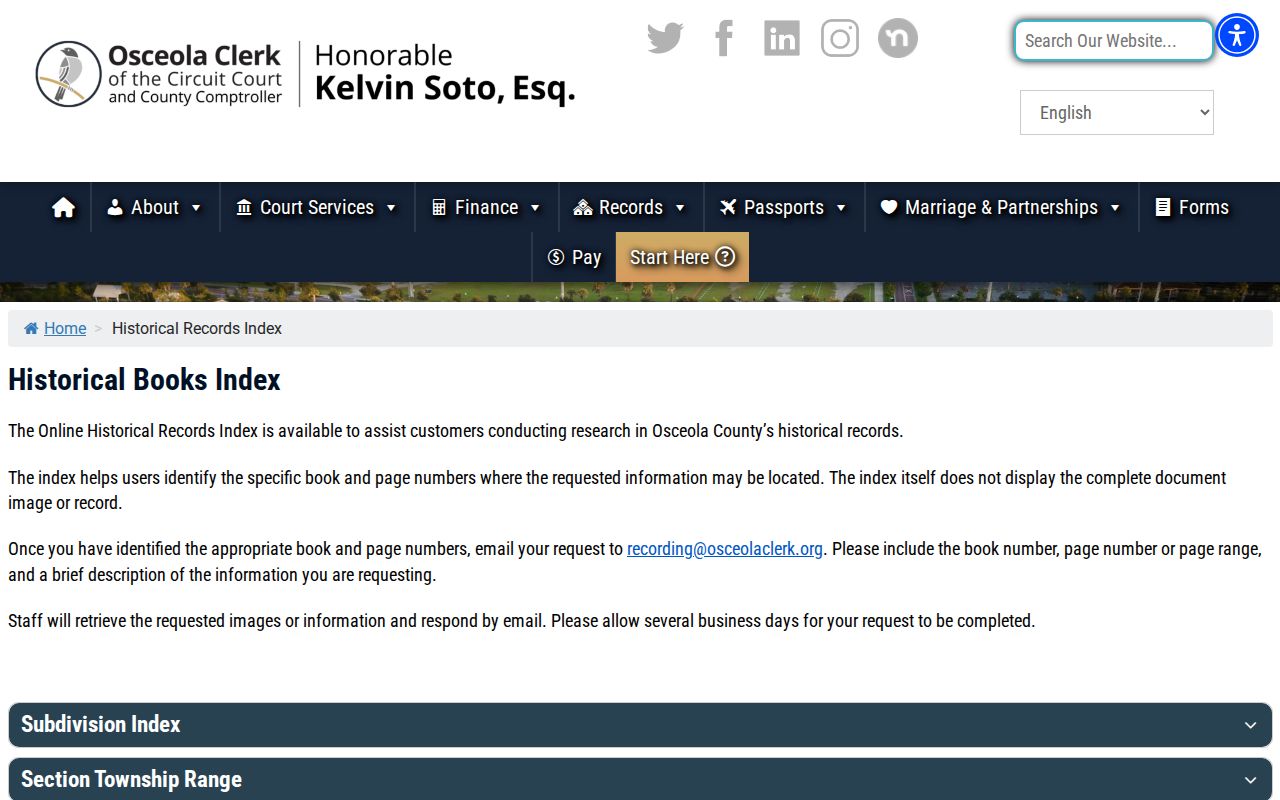
The screen shows the hybrid access point where online discovery becomes a precise records request.
The Clerk's subdivision and section-township-range finding aids carry 2026 editions. That is a timely index update, not proof that every historical deed image is online.
Offline Osceola Previous-Resident Records
When the index supplies a book and page but no image, use the Clerk's email procedure or ask the retained-paper Records Center. The courthouse at 2 Courthouse Square in Kissimmee is another access channel. Published Clerk hours are weekdays from 8 a.m. to 5 p.m., with recording and payments ending at 4:30 p.m.; confirm current service details before traveling.
The Osceola County Clerk Records Center explains the off-site storage role.
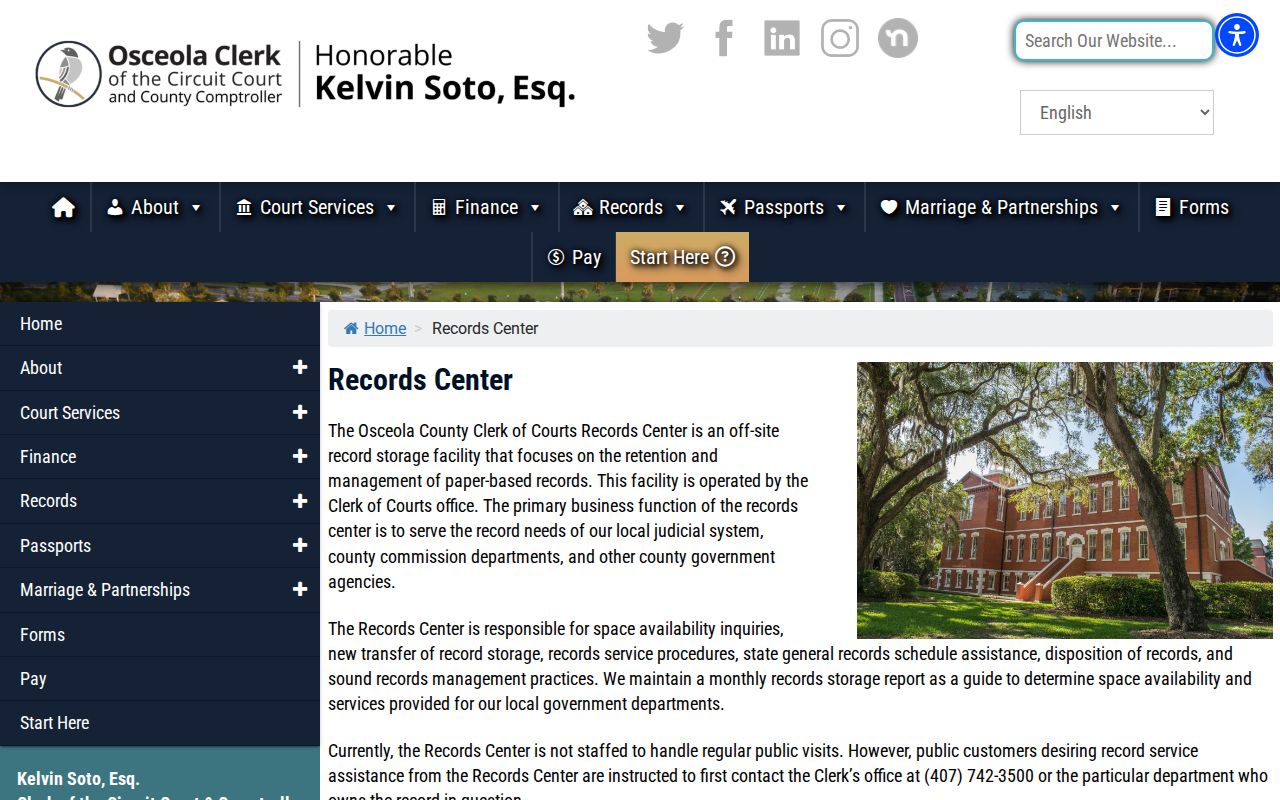
This fallback matters because a past-owner trail can survive in a retained file even when no scan appears in a web search.
The Clerk also lists a St. Cloud branch at City Hall, but custody remains countywide and current branch services should be checked first. Have the party name, record type, date range, and book/page ready.
Request an Osceola Missing Link
A precise request works better than asking the Clerk to research a house. Supply the address, parcel ID, legal description, indexed party names, date range, document type, and any book/page citation. Florida Public Records Law allows inspection and copying, but exempt information may be redacted and extensive clerical work may require a quoted charge.
The Clerk's records-request page routes unavailable material through JustFOIA and explains electronic certification.
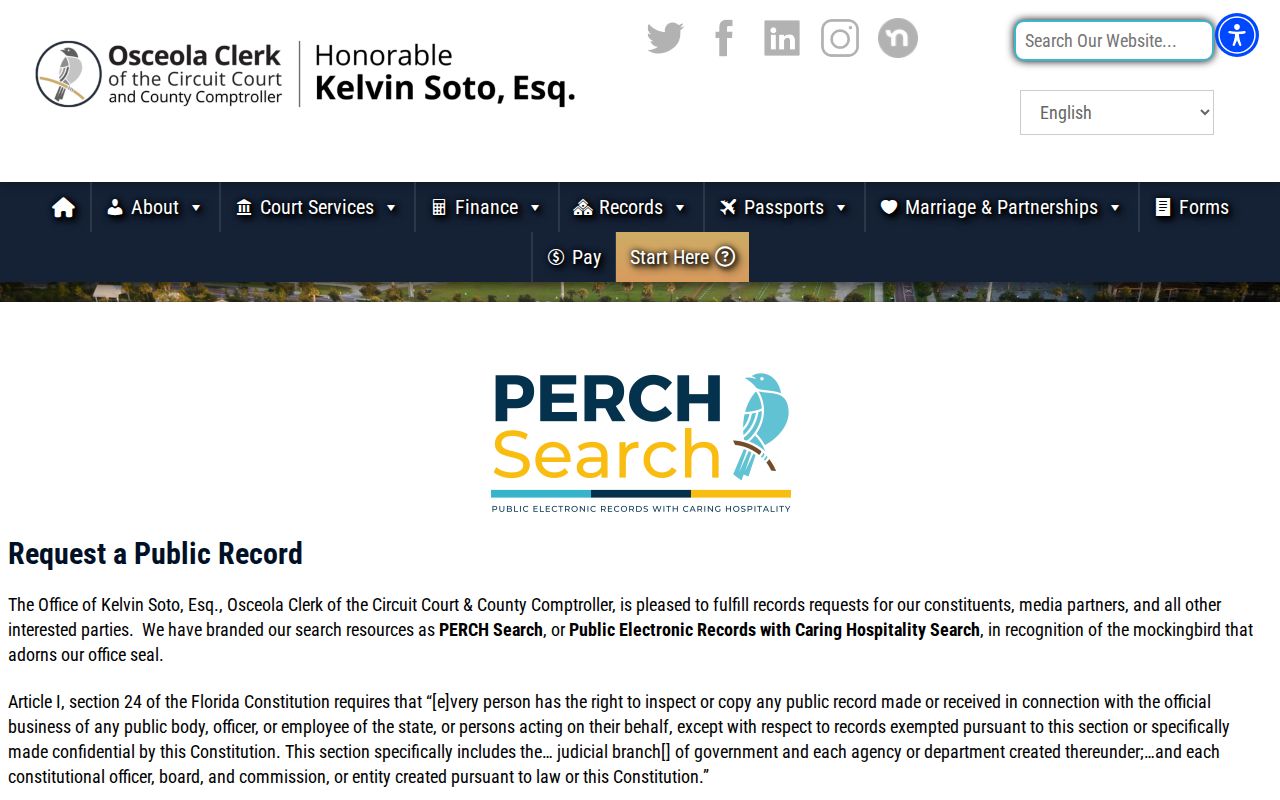
The page provides the formal fallback when PERCH discovery does not deliver the required image or retained file.
Note: Ask for a cost estimate and identify the exact record rather than requesting every document tied to an address.
Keep One Osceola Property in View
Names repeat, entities change, and street labels drift. The legal description is the continuity check. Older Osceola deeds may use subdivision and lot-block terms for platted land, section-township-range for rural land, or metes-and-bounds wording. Carry that text through each transfer. Do not jump from one same-named seller to another parcel.
No official countywide street-renumbering year was verified. If an old address fails, compare plats, cross streets, adjoining owners, historic maps, and the structure footprint. Current parcel cards also separate situs from owner mailing address. The latter may lead to a trustee, company, post office box, or different home, not to a previous resident of the site.
Osceola Past Households Between Records
Ownership and occupancy are not the same. The verified 1921-22 Kissimmee and St. Cloud city directory and Osceola County gazetteer can place a named resident near an address, occupation, spouse notation, or business. Whether a street-ordered section exists must be checked in that volume. Additional local years cannot be assumed from the State Library's statewide collection.
- Begin with a known person, year, and address from the deed, family record, or directory.
- Copy the directory entry and every abbreviation exactly. Check the volume's own key.
- Compare the entry with the 1920 or 1930 census, as appropriate. Use 1950 as the latest public federal population schedule in 2026.
- Move one directory issue or census decade at a time and note the first and last appearance.
- Use a marriage, death, obituary, probate, or later deed to explain a disappearance rather than guessing.
The Osceola County directory-book resource covers the collections themselves. Here, their role is narrower: add household names between ownership transfers and census snapshots.
Was the Osceola House There?
The Library of Congress holds a free, public-domain May 1889 Kissimmee Sanborn map with two sheets. It can show a building outline, construction material, use, street labels, and fire infrastructure. It does not name previous residents. Pair its footprint with a deed, directory, tax record, or census entry before tying a person to the structure.
Osceola County was created in 1887 from parts of Orange and Brevard Counties. An earlier resident or property event may remain under a predecessor county. The destroyed 1890 federal population schedules create another gap, so bridge 1880 to 1900 with deeds, tax lists, newspapers, church or vital records, and the 1889 map where it applies.
Permit files may date later construction, remodel, or demolition. Since no reliable countywide permit cutoff was found, search the correct city or county office and request archived inspections when the web index ends.
Close an Osceola Resident Trail
A probate case, obituary, cemetery record, marriage record, or death record can explain why a name leaves an address. Probate may identify a decedent, petitioner, personal representative, and heirs in public filings, subject to redaction. A personal-representative deed can then connect an estate directly to the next recorded owner.
The Clerk's division contact page helps route questions about official records and probate files.
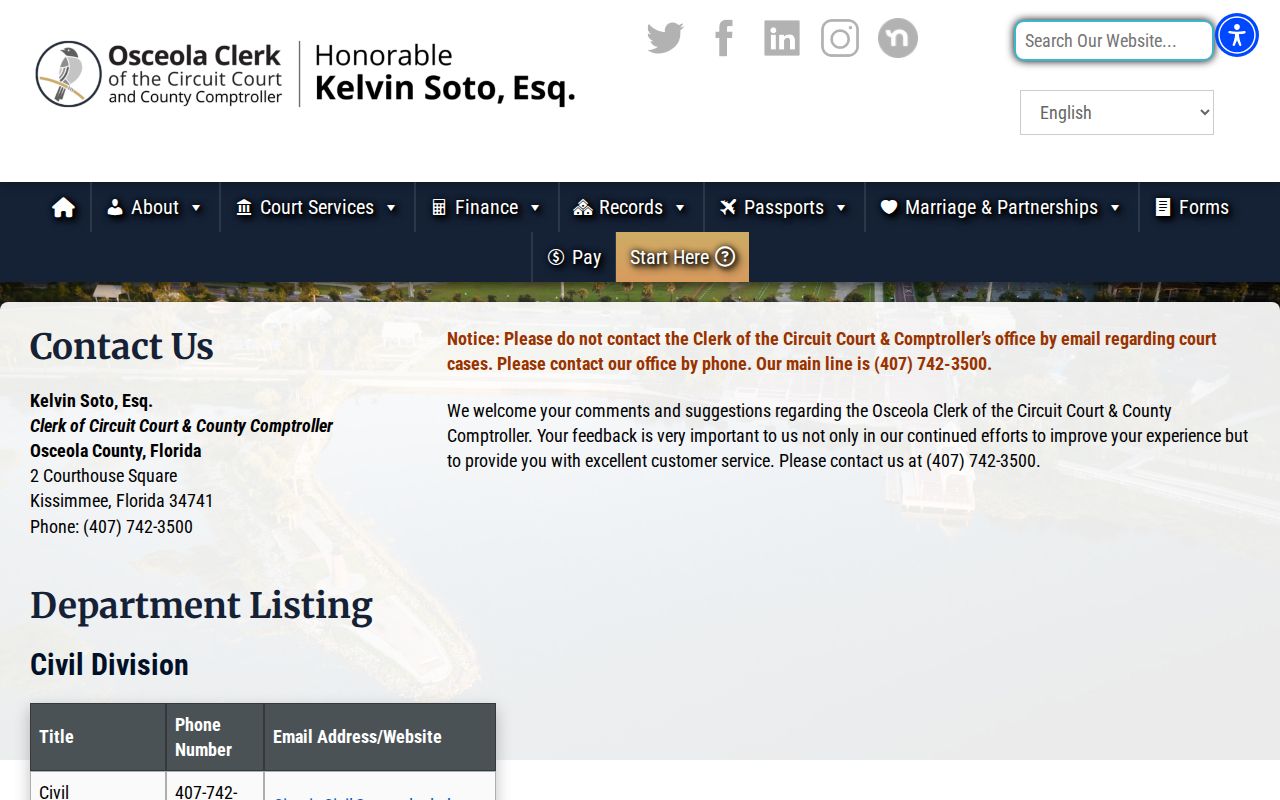
Use the listed division rather than asking one counter to interpret every part of the resident trail.
For family research, state marriage certifications cover events from June 6, 1927 forward, while earlier county marriage records remain a Clerk route. A state certificate is not the full court or license file.
The Florida marriage-certificate page outlines that state access channel.
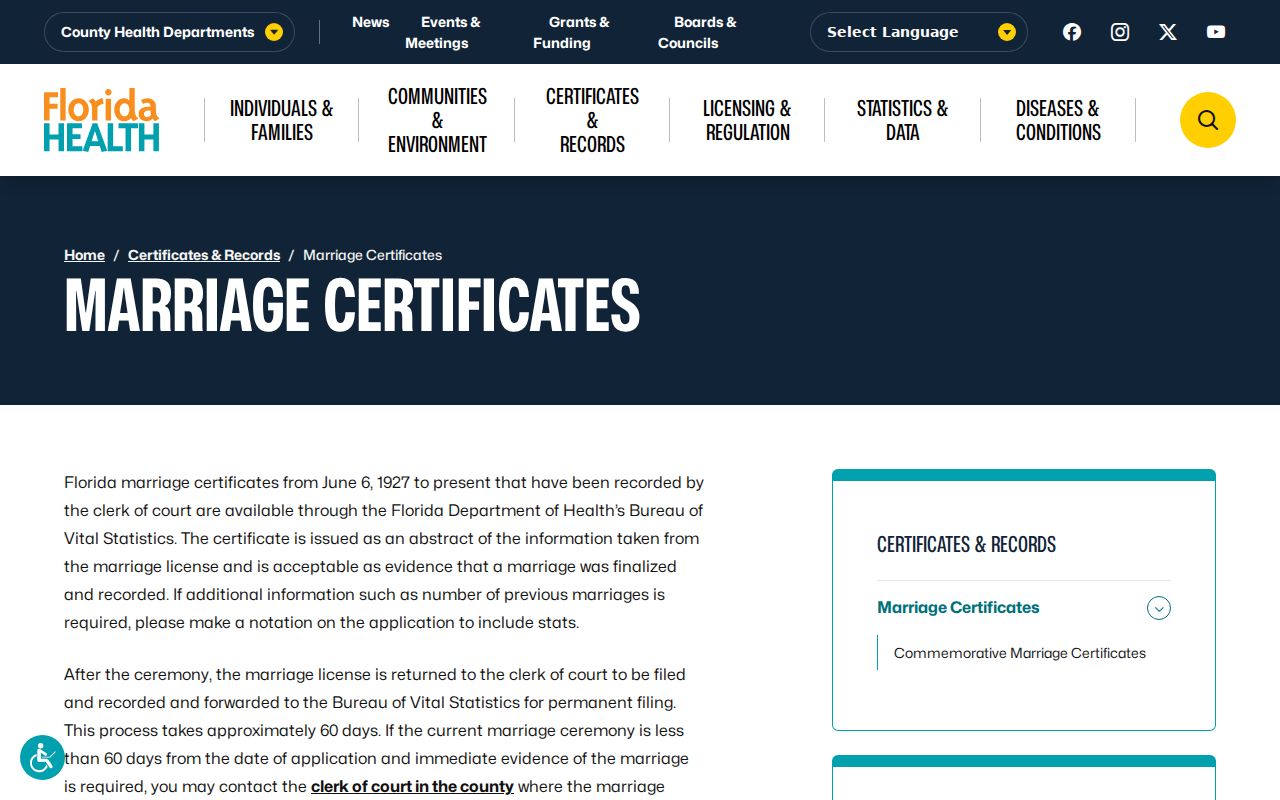
Marriage evidence can connect changed surnames, but the event details still need to match the person, place, and time under study.
Use Osceola Previous Residents Carefully
Past-resident research works best for family history, estate questions, and the history of a building. Public files can be incomplete or wrong. A directory is an annual snapshot. A census is a decennial enumeration. A current tax roll is not a historic roll, and a deed proves a transfer of land rather than the full household living there.
Lawful use. Use Osceola County previous residents records for legitimate personal research. Never use a name, address, or family link to track, harass, intimidate, or harm a living person.
Keep citations for each step: parcel ID, legal description, document number, book/page, directory year, census year, and access date. Mark an inference as an inference. The strongest house history separates an owner, a likely occupant, and a confirmed resident instead of blending them into one claim.